Pedagogy at Christ the King

Why we do what we do:
People often talk about their ‘pedagogical approach’ to teaching. But what does it actually mean?
Pedagogy is defined simply as the method, and practice, of teaching.
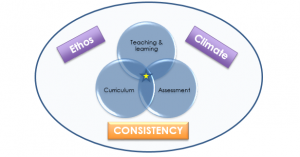
First and foremost, our approach is based on consistency. We are teaching children aged 3 to 11 so what we teach will be very different across the school, but the principles of how we teach, the methods and the approaches are consistent across our school.
There are many different theories to pedagogy and approaches to learning. These have been discussed by schools and researchers for many years and there are many different approaches. These all have their place; however, we have a core approach to our pedagogy at Christ the King.
Our approach is simple and consistent:
- we know what we want to teach in the long term
- we have clear short-term goals for children
- we build upon pupil’s prior learning and experiences – this is why we have mapped it out in every subject
- we try to scaffold learning to support children in their thinking
- we are ambitious so all children can make progress and overcome barriers if they are given appropriate support
The single most important factor in how a child learns in the classroom is how well a teacher teaches. Therefore, we have considered the key strategies and approaches, identified from research, to inform our pedagogy.
Many people have theories as to quality teaching and learning – ours is formed and shaped through educational research.
Our principles of pedagogy are based on Rosenshine’s research which focused on three key areas:
- Cognitive science – how the brain acquires and uses new information
- Observing the best or ‘master teachers’
- Helping learning with cognitive support and scaffolds – the use of models and instructions to help children learn complex things
Our pedagogical approach: what teachers do in our school
What teachers regularly do:
Based on the actions which ‘master’ teachers regularly employed within their lessons to enable learning to occur.
- Begin a lesson with a short review of previous learning.
- Present new material in small steps with student practice after each step.
- Limit the amount of material students receive at one time.
- Give clear and detailed instructions and explanations.
- Ask a large number of questions and check for understanding.
- Provide a high level of active practise for all students.
- Guide students as they begin to practise.
- Think aloud and model steps.
- Provide models of worked-out problems.
- Ask students to explain what they have learned.
- Check the responses of all students.
- Provide systematic feedback and corrections.
- Use more time to provide explanations.
- Provide many examples.
- Re-teach material when necessary.
- Prepare students for independent practice.
- Monitor students when they begin independent practice.
Our ten key principles, which underpin our pedagogical approach:
- Daily review.
Research finding: The first recommendation from the research is that a daily review is an important component of instruction. A review can help teachers strengthen the connections from the material to what students have learned.
In the classroom: The most effective teachers in the research of classroom instruction understand the importance of practice, and they often begin their lessons with a five-to eight-minute review of the last lesson.
- Present new material using small steps.
Research findings: Our working memory where we process information is small. Presenting too much material at once may confuse students because their working memory is swamped. Therefore, the more effective teachers do not overwhelm their students by presenting too much new material at once
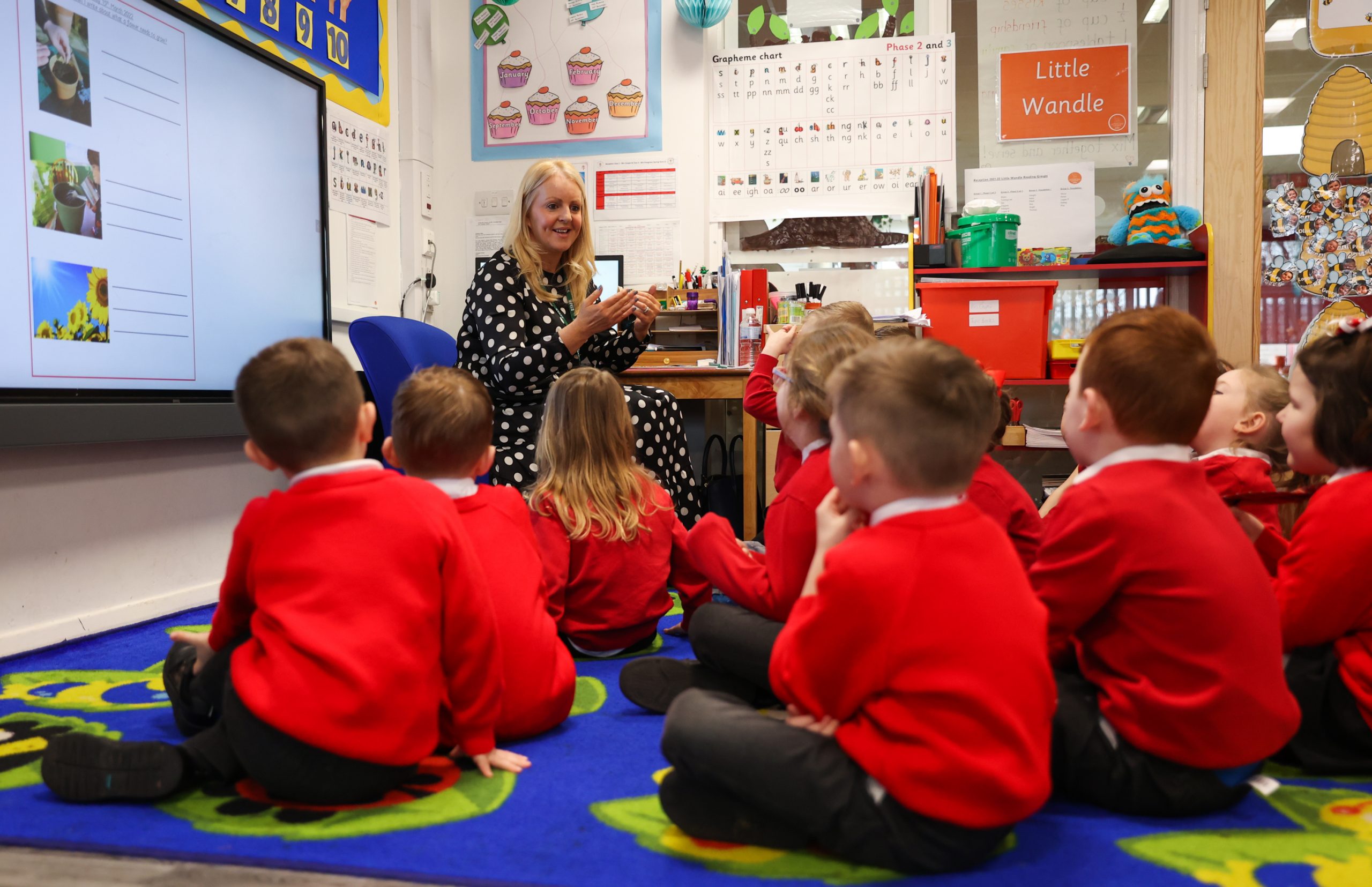
In the classroom: Successful teachers teach by giving a series of short presentations using many examples and guided practice.
- Ask questions.
Research findings: Students need to practise new material. How a teacher’s questions and how students discuss is a major way of providing this necessary practice. The most successful teachers spend more than half of the class time explaining, demonstrating, and asking questions.
In the classroom: Effective teachers increase the number of factual questions and process questions they ask during this guided practice.
- Provide models.
Research findings: Students need cognitive support to help them learn to solve problems. A teacher modelling and thinking aloud while demonstrating how to solve a problem are examples of effective cognitive support.
In the classroom: This can be conveyed by providing prompts, modelling the use of the prompts, and then guiding students as they develop independence. In the most effective teaching, students are given words such as “who,” “where,” “why,” and “how” to help them begin a question.
- Give children time to practise.
Research findings: It is not enough simply to present students with new material, because the material will be forgotten unless there is sufficient rehearsal. Students must spend additional time rephrasing, elaborating, and summarising new material in order to store the information in their long-term memory.
In the classroom: The most successful teachers present only small amounts of material at a time. After this short presentation, these teachers then guide student practise – and spend more time doing so. The result? Students are better prepared and achieve more.
- Check for understanding.
Research findings: The more effective teachers frequently check to see if all the students are learning the new material. These checks provide some of the processing needed to move new learning into long-term memory to let teachers know if students are developing misconceptions.
In the classroom: Effective teachers stop to check for student understanding, by asking questions and asking students to summarise. In less effective teaching, teachers ask students: “Are there any questions?” If there are no questions, the assumption is made that students understand. We ask questions!
- Obtain a high success rate.
The research suggests that the optimal success rate for fostering student achievement appears to be about 80 per cent; judged by the quality of students’ oral responses during guided practice and their individual work.
Research findings: The most effective teachers obtain this success by teaching in small steps. Practise, we are told, makes perfect. This is not to be confused with rote learning.
In the classroom: A crucial element of good teaching is that teachers provide systematic feedback and corrections of misconceptions. This is imperative for students to make progress. Feedback takes many forms: verbal, group, individual, live marking, marking of work in books etc. We want feedback and marking to be effective so we ensure our children act upon it.
- Provide scaffolds for difficult tasks.
Research findings: A scaffold is temporary support that is used to assist a student. These scaffolds are gradually withdrawn as learners become more competent, and include the teacher ‘thinking out loud’ as they solve the problem.
In the classroom: A teacher may show the thought processes they go through as they determine the topic of the paragraph and then use the topic to generate a summary sentence. The teacher would also anticipate likely mistakes…
- Independent practice.
Research findings: Guided practice is followed by independent practice – by students working alone and practising the new material.
In the classroom: Successful teachers provide for extensive and successful practice, both in the classroom and after class. Students are more engaged when their teacher circulates around the room and supervises seated work. The optimal time, according to the research, is 30 seconds or less.
- Weekly and monthly review.
Research findings: Students need extensive, broad reading and extensive practise in order to develop well-connected networks of ideas (schemas) in their long-term memory… Knowledge stored in long-term memory that is organised into patterns only occupies a tiny amount of space in our limited working memory. So, having larger and better-connected patterns of knowledge frees up space in our working memory.
In the classroom: One way we achieve this goal is to regularly review the previous week’s work every week and the previous month’s work every fourth week. Research suggests that classes that do this achieve more.
Research is clear, learning that is not adequately practised and reviewed is easily forgotten!
If you looked at teaching and learning in our school this is what you would see teachers doing and hence children learning. It is consistent and applied across the whole school.
This is our approach to learning when we want our children to learn the crucial knowledge that is essential to their success as learners. Rosenshine’s Principles have a solid evidence base to support their effectiveness. However, as Rosenshine and Stevens (1986) point out, they are most effective where the objective is to master a body of knowledge or key skill involving clearly laid out steps, which the children are expected to apply later. This is why we have invested our time wisely into devising our own curriculum which has key knowledge clearly mapped out. We have organised learning for our children so that it is clear what we want them to understand, know and be able to do in each subject. Our learning is progressive and is planned.